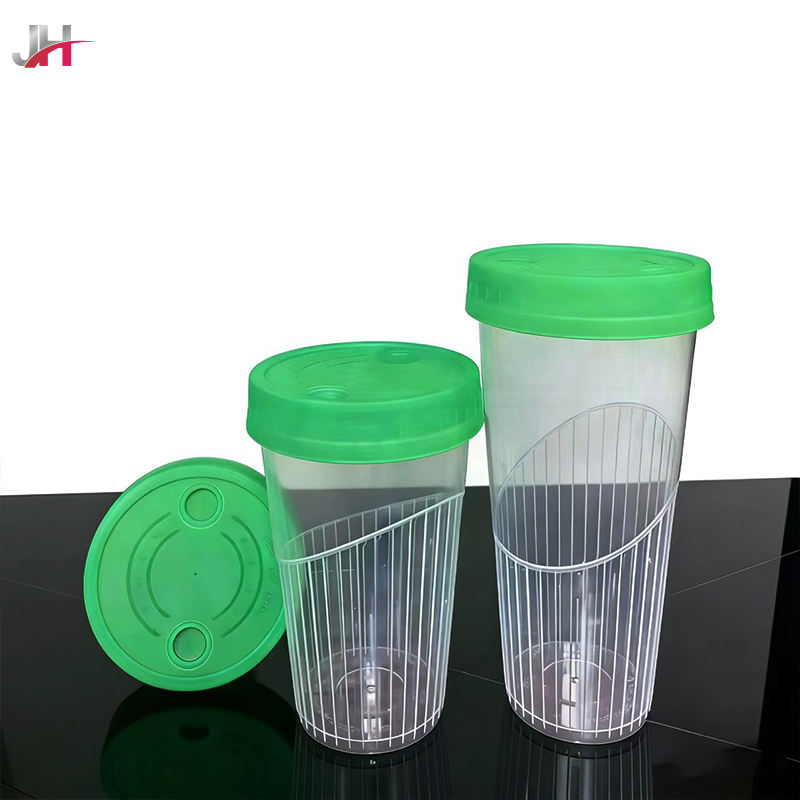
Article Quick Facts
Two Processes, Two Very Different Cups
Injection molding and thermoforming are the two primary ways beverage cups are made. Injection molding involves injecting molten PP into a mold to create a thick, rigid wall. Thermoforming heats a PET sheet and uses a vacuum to pull it into a shape, resulting in a thin, glass-clear cup. The process you choose determines the cup weight, rigidity and suitable beverage temperature.
Weight & Process Comparison
The table below compares the gram weight of listed injection-molded PP cups versus thermoformed PET cups of similar caliber, using verified specifications.
| Process | Model | Caliber | Capacity | Weight |
|---|---|---|---|---|
| Thermoformed PET | 95-9507 | 95 mm | 16 oz | 14 g |
| Thermoformed PET | 95-9508 | 95 mm | 22 oz | 16 g |
| Injection PP | PP-95 | 95 mm | 500 ml | 14 g |
| Injection PP | PP-95 | 95 mm | 650 ml | 18 g |
| Injection PP | PP-95 | 95 mm | 750 ml | 22 g |
| Injection PP | PP-92 Sq | 92 mm | 650 ml | 28 g |
| Injection PP | PP-92 Sq | 92 mm | 960 ml | 35 g |
Choosing the Process for Your Brand
Choose injection-molded PP if you need a high-end "sturdy" feel, heat resistance for hot tea, or a square format. Choose thermoformed PET if you need maximum clarity for iced coffees or layered fruit teas. Both processes support custom mold development and high-quality printing, but the MOQ and lead times may vary. Confirm the exact production schedule with the factory.
Article FAQs
Injection molding produces a thicker wall for rigidity and heat resistance. A 95mm injection cup can weigh 14-22g, while a similar caliber PET cup is typically 14-16g.
Yes, if the rim caliber (caliber) is identical, e.g. 95mm. Lid fit depends on the rim diameter, not the manufacturing process.
Injection-molded PP is the choice for hot drinks (tolerating up to 100°C). Thermoformed PET is cold-only and should not be used for drinks above 60°C.