Article Quick Facts
Why the Material Choice Matters
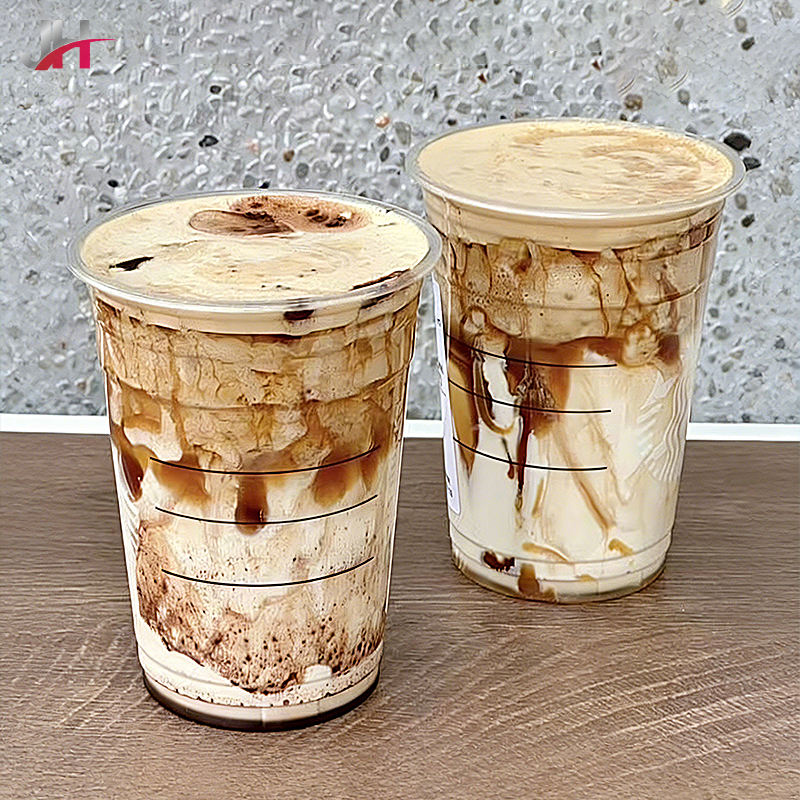
For boba shops, coffee houses, and juice bars, the cup is more than just a container—it's a marketing tool. The clarity of the cup dictates how your drink looks on Instagram, while the sturdiness affects the customer experience during delivery. The two industry standards are PET (Polyethylene Terephthalate) and PP (Polypropylene).
PET vs PP: Key Differences at a Glance
To help you make the right choice, we have compiled this direct comparison table based on our factory production standards.
| Feature | PET Cold Cups | Injection PP Cups |
|---|---|---|
| Transparency | Crystal clear (Glass-like) | Translucent to high-clarity |
| Heat Resistance | Up to 60°C (Cold only) | Up to 100°C (Hot & Cold) |
| Wall Rigidity | Flexible (Thermoformed) | Hard & Rigid (Injection molded) |
| Sealing Machine | Compatible (PET film) | Compatible (PP film) |
| Sustainability | Highly recyclable (Code 1) | Recyclable (Code 5) |
| Typical Weight | 3.8g - 20g (Lightweight) | 14g - 35g (Heavy duty) |
When to Choose PET Cold Cups
PET cups are the gold standard for iced beverages. If you serve iced coffee, fresh juices, or layered smoothies where visual appeal is paramount, PET is the winner. Its crystal-clear finish makes colors pop. However, it cannot withstand heat—pouring a hot liquid into a PET cup will cause it to deform immediately. View our full range of PET cold cups for technical specs.
When to Choose Injection PP Cups
PP cups are preferred by premium bubble tea brands. Because they are injection-molded, they have a thick, rigid wall that feels more high-end in the hand. Crucially, they are heat-resistant, making them the only choice for hot tea or coffee service. They also work perfectly with standard cup-sealing machines commonly used in boba shops.
Article FAQs
Only if the caliber (rim diameter) matches. We produce standardized 90, 95, and 98mm calibers for both materials to help our clients simplify their lid inventory.
PET (Code 1) is the most widely recycled plastic in the world and has a more established recycling stream. PP (Code 5) is also recyclable but depends more on local municipal facilities.